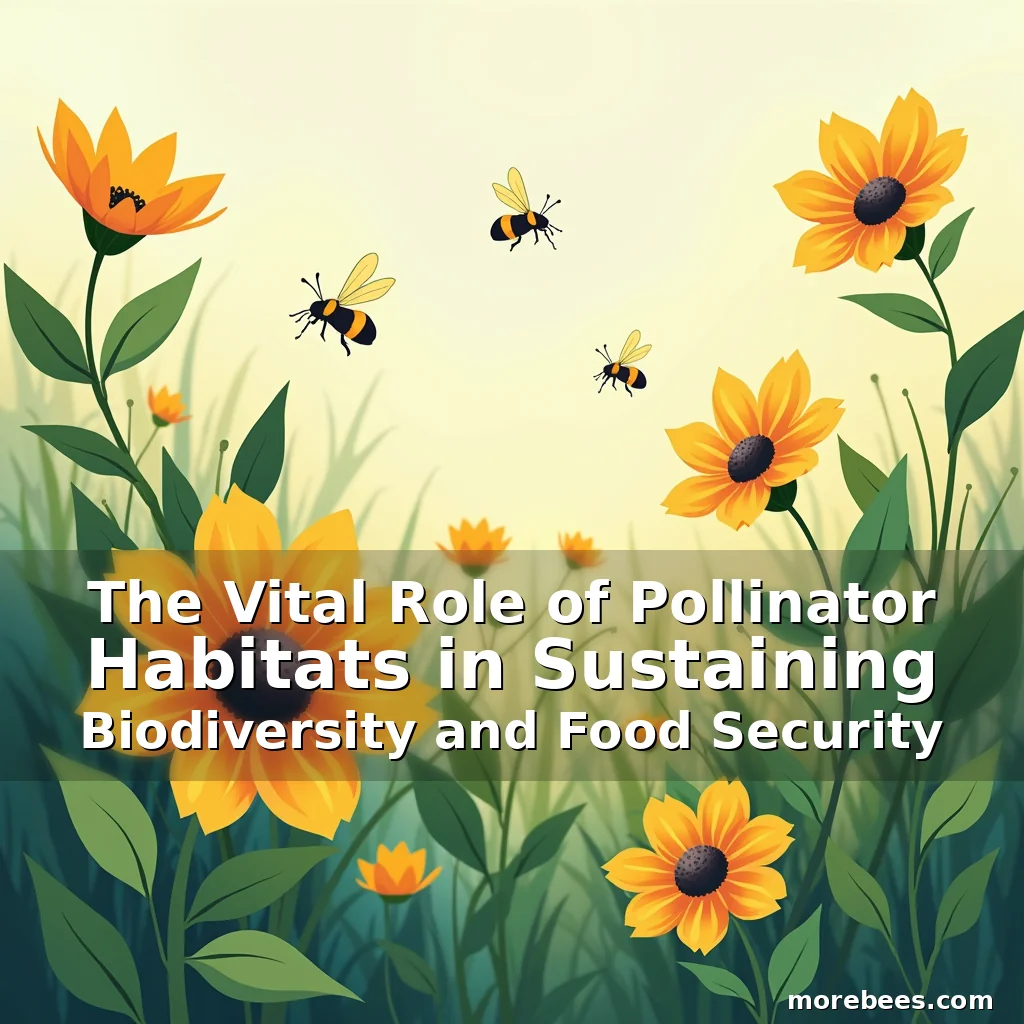
The Vital Role of Pollinator Habitats in Sustaining Biodiversity and Food Security
Pollinator habitats are essential ecosystems that support not only bees but also butterflies, birds, bats, and other species critical to plant reproduction. These specialized environments provide food, shelter, and breeding grounds necessary for the survival of pollinators, which in turn sustain our planet’s biodiversity and agricultural productivity.
In an era where habitat loss threatens global bee populations at unprecedented rates, understanding and preserving these vital spaces has become imperative for both environmental health and human well-being. This guide explores how we can create, protect, and restore pollinator-friendly habitats through informed action and collective effort.
Understanding What Makes a Habitat Pollinator-Friendly
A truly pollinator-friendly habitat must offer three fundamental elements: diverse flowering plants, safe nesting areas, and minimal pesticide use. The availability of continuous blooming flora ensures that pollinators have access to nectar and pollen sources year-round, reducing their stress during lean seasons.
Nesting sites vary widely among different pollinators. Bees require hollow stems or cavities, while butterflies need leaf litter or bare soil for laying eggs. Providing varied microhabitats within your garden or landscape is crucial for supporting a wide range of pollinating insects.
- Diverse Plant Selection: Choosing native flowers from various bloom times ensures that pollinators have a consistent food supply across all seasons.
- Reduced Pesticide Exposure: Chemical pesticides often harm non-target organisms including beneficial pollinators by disrupting their nervous systems or reproductive capabilities.
Native Plants: Nature’s Best Kept Secret for Pollinators
Planting native species provides significant advantages over exotic ornamentals because they’ve co-evolved alongside local wildlife. Native plants typically require less water and maintenance while offering optimal nutrition for indigenous pollinators accustomed to their chemical composition.
Studies show that certain native wildflowers attract twice as many pollinators compared to non-native alternatives due to better compatibility with local insect physiology and behavior patterns. For example, milkweed varieties are essential for monarch butterfly larvae development stages.
The Science Behind Native Plant-Pollinator Relationships
Research conducted by entomologists reveals fascinating interactions between specific plant-pollinator pairs. One study found that blueberry bushes attract significantly higher numbers of bumblebees when planted near clover patches, suggesting synergistic effects between adjacent plantings.
Moreover, native plants produce floral scents tailored specifically for attracting regional pollinators. These scent profiles help insects locate suitable flowers efficiently even under challenging weather conditions such as strong winds or heavy rains.
Creating Microhabitats Within Your Space
Even small urban gardens or balconies can be transformed into thriving pollinator sanctuaries through thoughtful design choices. Incorporating features like vertical gardens or hanging flower baskets allows limited spaces to maximize surface area available for pollination activities.
Beyond planting alone, incorporating natural elements like logs, stones, and bundles of twigs creates shelter opportunities for solitary bees who don’t rely on traditional hives. Such structures mimic natural nesting environments lost due to modern landscaping practices.
- Vertical Gardening Solutions: Using trellises or wall-mounted planters increases accessibility without requiring extensive ground space.
- Soil Preparation Tips: Ensuring good drainage prevents root rot issues while maintaining healthy soil structure supports robust plant growth essential for sustaining pollinators.
Managing Landscapes Without Harmful Chemicals
Chemical-free gardening is becoming increasingly popular as awareness grows regarding its benefits for ecological balance. Organic mulches not only suppress weeds naturally but also retain moisture levels ideal for both plants and visiting pollinators seeking hydration sources.
Integrated Pest Management (IPM) strategies prioritize prevention rather than eradication, using physical barriers like netting or companion planting techniques that deter pests without relying on synthetic chemicals harmful to pollinators.
- Companion Planting Benefits: Marigolds repel nematodes effectively while attracting predatory insects that control pest populations organically.
- Mulch Application Guidelines: Applying a layer of organic matter around base of plants helps regulate temperature fluctuations benefiting both roots and emerging pollinators.
Educational Outreach and Community Involvement
Community education plays a pivotal role in expanding pollinator conservation efforts beyond individual actions. Local schools integrating pollinator studies into science curriculums cultivate early appreciation for ecosystem interdependencies among students.
Citizen science initiatives allow volunteers worldwide to contribute meaningful data collection tasks related to tracking pollinator population trends or identifying new species sightings contributing directly to scientific research agendas focused on climate change impacts.
- School Programs Impact: Children participating in schoolyard habitat projects develop lifelong stewardship attitudes towards nature preservation efforts.
- Data Collection Opportunities: Mobile apps enable users to document observations instantly helping scientists map distribution ranges accurately for endangered pollinators globally.
Policy Advocacy and Legislative Support
Government policies play crucial roles shaping land management practices affecting pollinator viability nationwide. Legislation mandating reduced pesticide usage in public parks or banning neonicotinoids altogether demonstrates proactive measures being taken globally toward protecting vulnerable pollinators.
Supporting local ordinances promoting pollinator protection helps ensure consistent standards are maintained across regions facing similar challenges posed by industrial agriculture expansion threatening wildflower meadows traditionally used by numerous insect species for foraging purposes.
- Legislative Examples: Several European countries now enforce strict regulations limiting chemical inputs within protected natural reserves designated exclusively for pollinator conservation purposes.
- Public Park Initiatives: Urban municipalities implementing pollinator pathways connecting green spaces enhance mobility corridors facilitating migration routes for winged creatures dependent upon continuous resource availability along travel paths.
Climate Change Impacts on Pollinator Habitats
Rising temperatures alter phenological timing mismatching when flowers open relative to when pollinators emerge from winter dormancy periods leading to potential mismatches impacting successful fertilization processes crucially required for seed production cycles.
Changes in precipitation patterns affect soil moisture contents influencing germination success rates of native plant seeds potentially reducing future generations’ ability to establish themselves successfully thereby diminishing overall floral resources accessible to dependent pollinators later on.
- Phenology Shifts: Earlier spring blooms may occur before peak pollinator activity resulting in unutilized nectar supplies going wasted decreasing energy intake efficiencies for foragers needing substantial caloric intakes daily.
- Water Availability Concerns: Drought-prone regions face heightened risks of diminished floral diversity unless adaptive irrigation methods coupled with drought-resistant plant selections are implemented strategically.
Restoration Projects and Their Ecological Benefits
Landscape restoration projects dedicated solely to reviving degraded lands back into functional pollinator refuges yield measurable positive outcomes across multiple ecological indicators. Reintroducing native grasslands or wetland vegetation enhances soil fertility levels simultaneously improving water retention capacities vital for sustaining floral communities reliant upon stable hydrological regimes.
Such interventions create buffer zones against invasive species encroachment by establishing competitive dominance through high biomass generation characteristics exhibited commonly by most native perennial herbs preferred heavily by various kinds of pollinators visiting regularly throughout growing seasons.
- Soil Health Improvements: Increased organic matter accumulation via decomposing plant material boosts microbial activity enhancing nutrient cycling efficiency greatly benefitting subsequent crop yields grown nearby utilizing same nutrient pools replenished naturally through biological decomposition mechanisms.
- Biodiversity Enhancement: Multi-layered canopy formations generated through strategic tree planting increase niche availabilities accommodating broader taxonomic groups ranging from beetles up through vertebrate pollinators requiring distinct structural requirements fulfilling their particular ecological needs uniquely.
Technology Integration for Pollinator Conservation
Advancements in remote sensing technologies now allow researchers monitor changes occurring within vast landscapes previously difficult to assess manually. Satellite imagery combined with AI algorithms enables identification of declining floral coverages prompting timely intervention strategies aimed at reversing degradation trajectories before irreversible damage occurs permanently altering entire ecosystems irreversibly.
Smart sensors embedded within monitoring stations collect real-time atmospheric parameters influencing pollinator behaviors enabling predictive models forecasting potential disruptions allowing preemptive adjustments made proactively minimizing negative consequences arising unexpectedly from sudden climatic shifts.
- AI Monitoring Systems: Machine learning applications process massive datasets revealing subtle trends invisible through conventional observational methods providing deeper insights guiding targeted conservation priorities effectively.
- Sensor Networks: Distributed sensor arrays track microclimate variations precisely informing localized mitigation tactics ensuring site-specific solutions addressing unique environmental pressures confronting each monitored location separately.
Personal Contributions and Everyday Actions
Individuals can make impactful contributions simply by making mindful decisions regarding outdoor spaces managed personally whether front yards, rooftops, or balcony terraces wherever feasible. Selecting locally adapted plant specimens guarantees superior adaptation abilities increasing chances surviving harsher winters typical experienced annually by northern hemisphere inhabitants.
Engaging neighbors collaboratively establishes larger contiguous networks amplifying cumulative effect exponentially surpassing isolated pockets individually incapable generating sufficient scale necessary supporting viable pollinator colonies persistently over extended durations spanning several years consistently.
- Neighborhood Collaboration: Organizing group planting events fosters shared ownership cultivating stronger communal bonds reinforcing long-term commitment toward sustained care responsibilities delegated collectively amongst participants involved initially.
- Educational Workshops: Hosting informational sessions educates attendees about practical steps anyone could implement easily enhancing effectiveness reaching wider audiences beyond immediate circles originally intended primarily targeting close friends family members alone.
Conclusion
Preserving and enhancing pollinator habitats represents a multifaceted endeavor involving scientific knowledge application, policy advocacy, technological innovation, and personal responsibility. Through concerted efforts at every level—from individuals tending small gardens to governments enacting protective legislation—these vital ecosystems stand a greater chance of enduring threats looming continuously over them.
By embracing sustainable practices today, we invest in tomorrow’s ecological stability and agricultural resilience. Every flower planted, every pesticide avoided, and every educational moment shared contributes meaningfully toward securing healthy pollinator populations essential for life itself.